All Projects
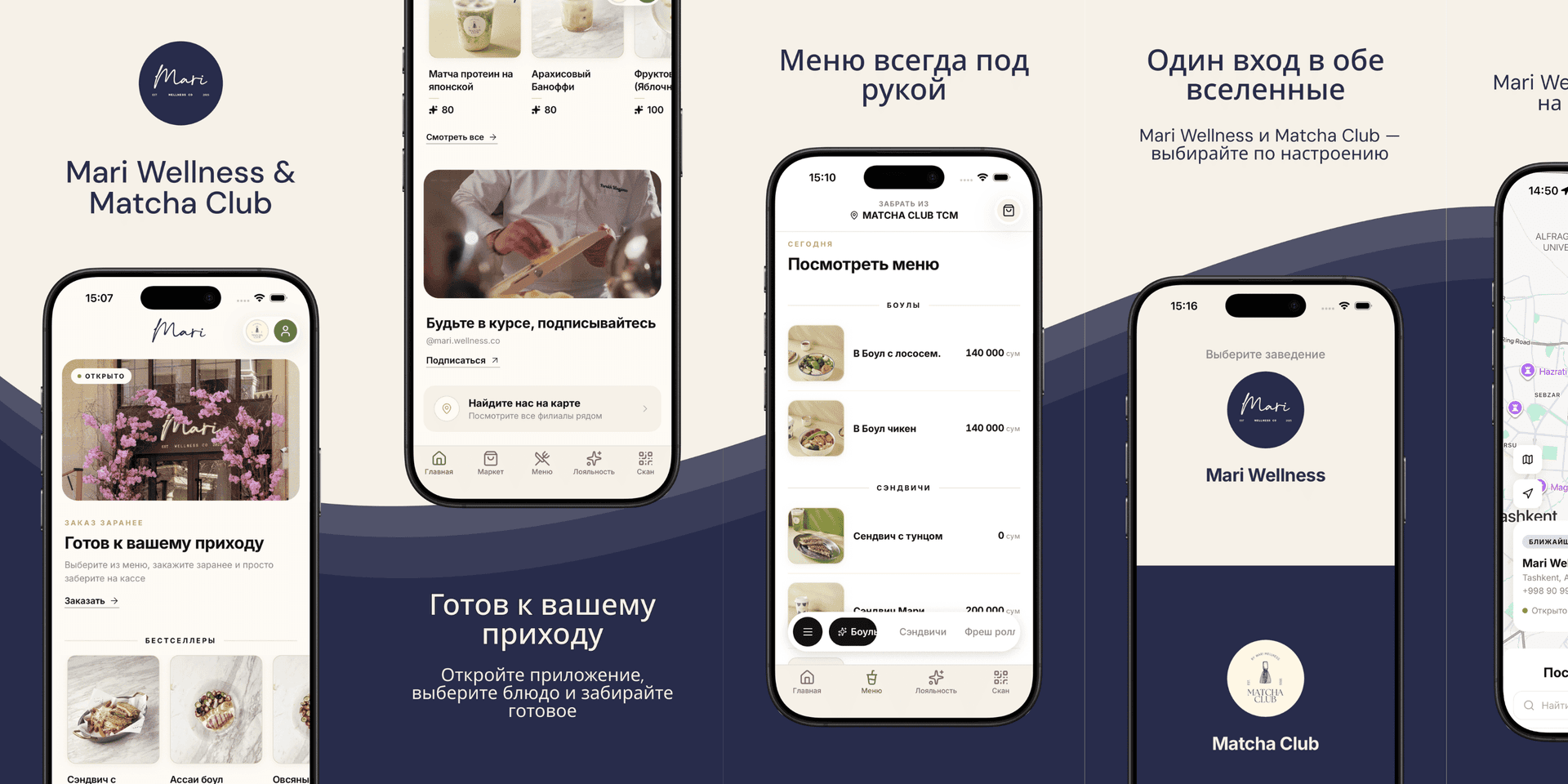
Mari Wellness
Backend API behind the Mari Wellness mobile app and its management panel. It splits into two tiers over shared models: a public `api/v1` for the app and a separate `management` API for admins, each with its own views, serializers and permissions. The public side covers passwordless phone-OTP auth with Google and Apple sign-in, a nested product catalogue with customisations and combos, geo-sorted store discovery, cart and order lifecycle with promo codes, payment-gateway webhooks, a points-based loyalty programme and a juice-card scheme. The admin side adds per-store menus with copy-on-write overrides, Excel import for market items, QR scan-and-charge, live order boards, push campaigns and analytics.
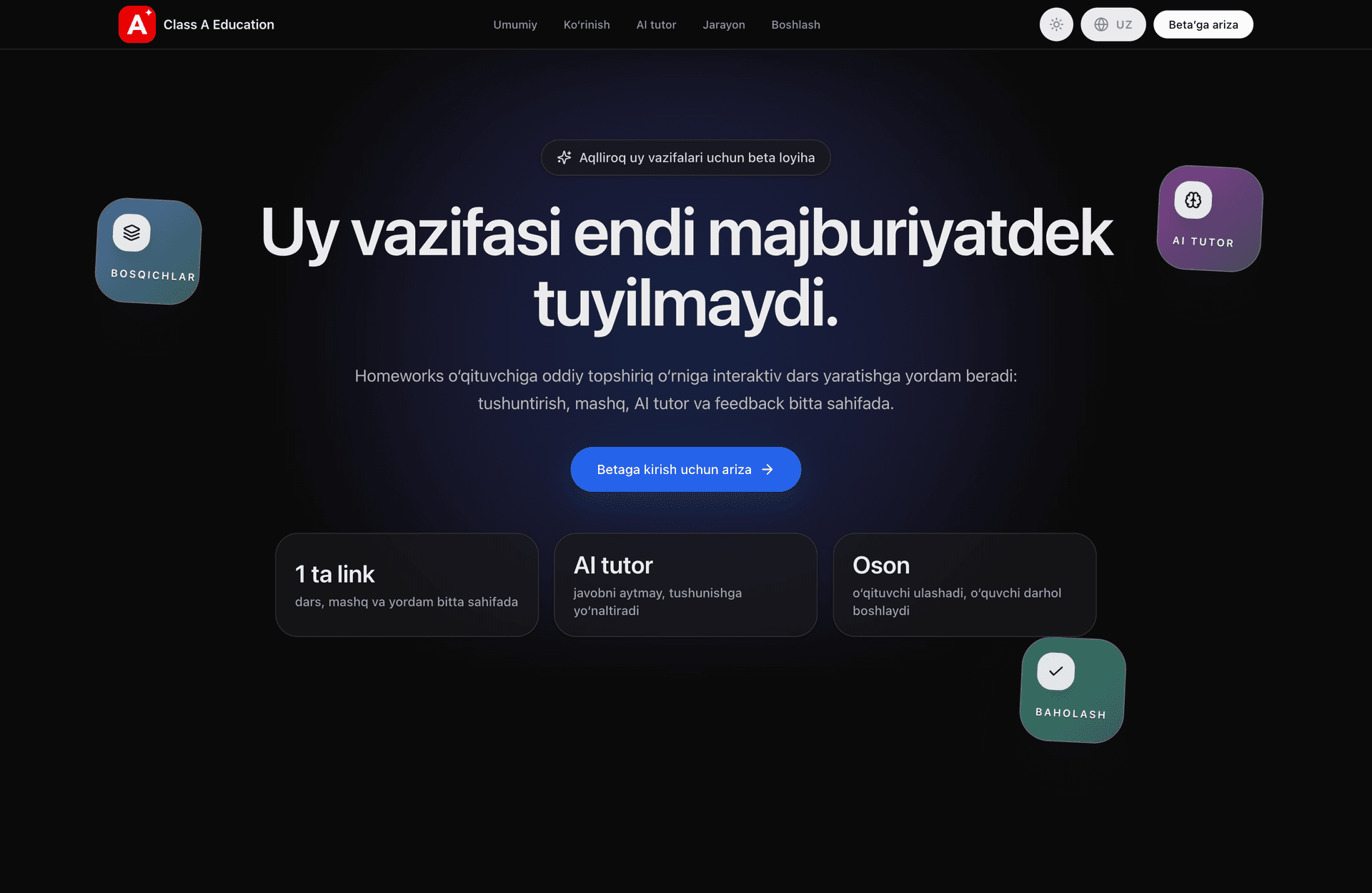
Class AI Education
School management platform covering schools, teachers, students and parents, with timetabling, a library and curriculum module, quizzes, attendance tracking and gamification. Built as a versioned REST API with generated OpenAPI schemas, running behind a reverse proxy with metrics and dashboards for monitoring. The AI side generates homework as a staged lesson - explanation, practice, then feedback - shared with students through a single link, with an AI tutor that guides rather than answers.
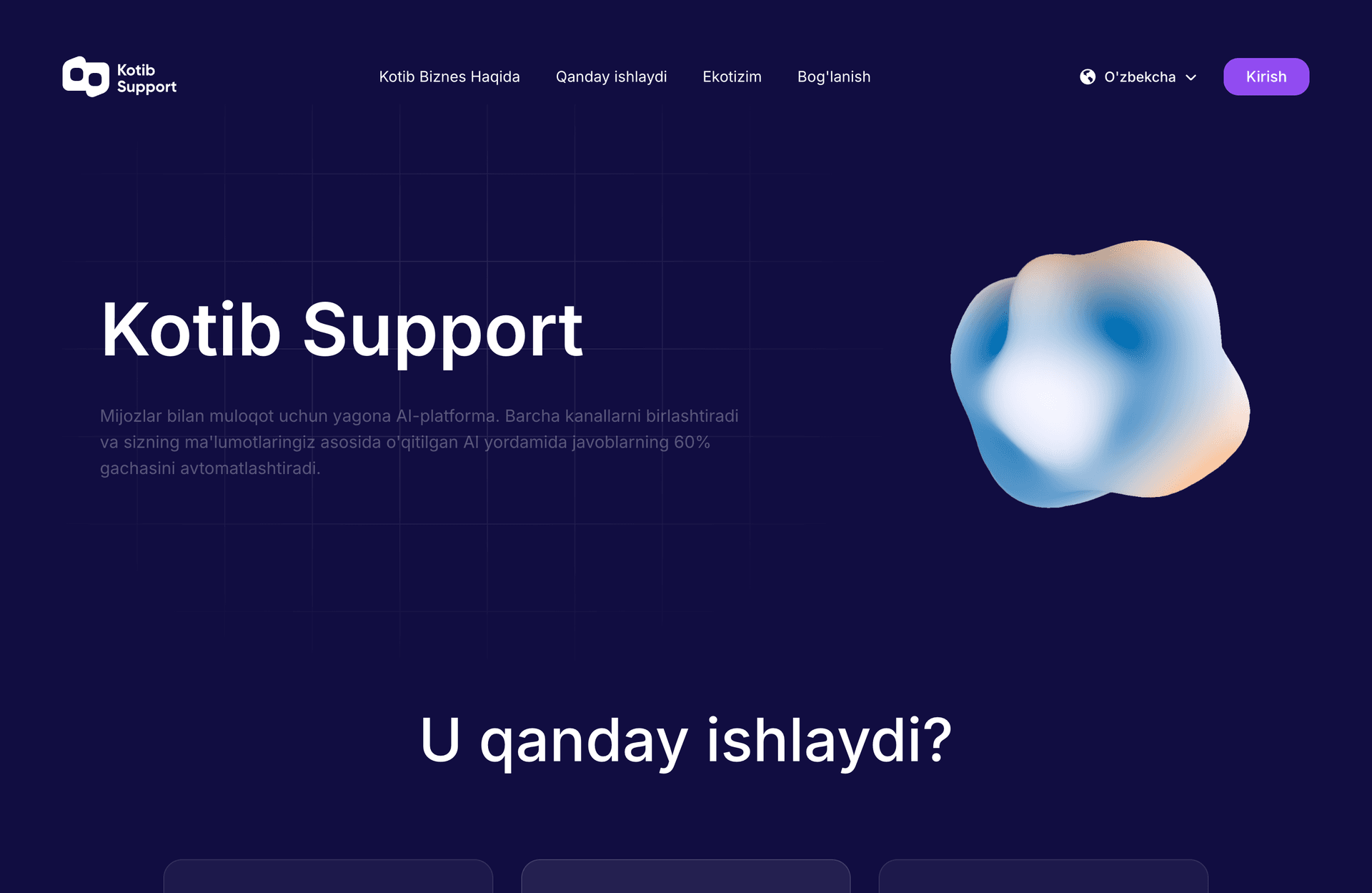
Kotib Support
Backend for an omnichannel AI support desk. Conversations from Telegram - both bot accounts and full user accounts - plus Instagram and website chat land in one operator inbox. Knowledge is organised per department in two forms: uploaded PDF and DOCX documents, and structured knowledge items built from text blocks with optional images per block, each versioned through draft and published states in Uzbek, Russian or English. The assistant answers from that base using vector embedding search and returns the relevant block images alongside its reply, escalating to a free operator with full history when it cannot help.
%22%2F%3E%3Cstop%20offset%3D%221%22%20stop-color%3D%22hsl(161%2062%25%2014%25)%22%2F%3E%3C%2FlinearGradient%3E%3Cpattern%20id%3D%22d%22%20width%3D%2248%22%20height%3D%2248%22%20patternUnits%3D%22userSpaceOnUse%22%3E%3Ccircle%20cx%3D%223%22%20cy%3D%223%22%20r%3D%222.5%22%20fill%3D%22%23ffffff%22%20fill-opacity%3D%220.07%22%2F%3E%3C%2Fpattern%3E%3C%2Fdefs%3E%3Crect%20width%3D%221600%22%20height%3D%221000%22%20fill%3D%22url(%23g)%22%2F%3E%3Crect%20width%3D%221600%22%20height%3D%221000%22%20fill%3D%22url(%23d)%22%2F%3E%3Ccircle%20cx%3D%221380%22%20cy%3D%22140%22%20r%3D%22260%22%20fill%3D%22%23ffffff%22%20fill-opacity%3D%220.05%22%2F%3E%3Ctext%20x%3D%22800%22%20y%3D%22543%22%20text-anchor%3D%22middle%22%20font-family%3D%22Inter%2C%20'Segoe%20UI'%2C%20system-ui%2C%20sans-serif%22%20font-size%3D%22124%22%20font-weight%3D%22700%22%20letter-spacing%3D%22-2%22%20fill%3D%22%23ffffff%22%20fill-opacity%3D%220.92%22%3EKotib%20AI%3C%2Ftext%3E%3C%2Fsvg%3E)
Kotib AI
Kotib AI offers comprehensive text and audio processing services. It provides transcription for audio and video, translations between Uzbek, Russian, and English, and text-to-speech conversion. Additionally, Kotib AI can transliterate between Uzbek Cyrillic and Latin scripts and check text for spelling and grammar errors. The processed text can be used for concise summaries or detailed content, making Kotib AI a versatile tool for diverse linguistic needs.
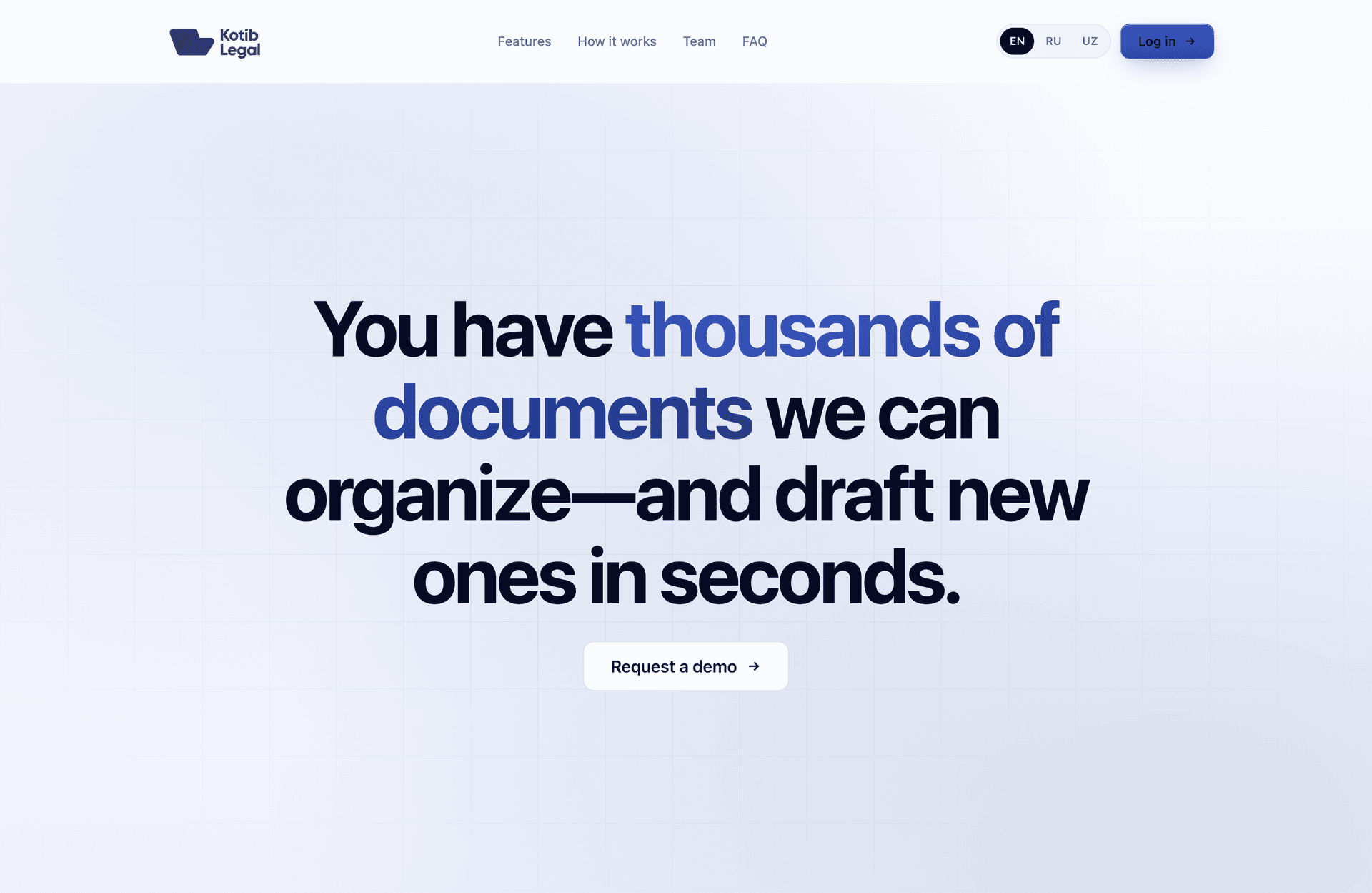
Kotib Legal
Platform for contract extraction and obligation management. It offers two extraction paths: a fixed workflow that pulls a predefined set of smart fields with simple three-state tracking, and an agent-based mode where the model analyses the document end to end, discovers every obligation rather than a fixed list, creates the contract record itself and reports progress through a nine-state workflow. Extracted obligations feed a tracker that fires renewal and deadline alerts. API responses are cached at four TTL tiers, throttled at 30 requests a minute for anonymous and 100 for authenticated users, with documents in object storage and metrics and dashboards wired in.

Hamroh
Back-office system for a women's entrepreneurship support programme. It takes in applications, runs them through a scoring module, and tracks accepted entrepreneurs through trainings and assigned tasks, with a document store for the paperwork attached to each case and an audit log recording every state change.
%22%2F%3E%3Cstop%20offset%3D%221%22%20stop-color%3D%22hsl(263%2062%25%2014%25)%22%2F%3E%3C%2FlinearGradient%3E%3Cpattern%20id%3D%22d%22%20width%3D%2248%22%20height%3D%2248%22%20patternUnits%3D%22userSpaceOnUse%22%3E%3Ccircle%20cx%3D%223%22%20cy%3D%223%22%20r%3D%222.5%22%20fill%3D%22%23ffffff%22%20fill-opacity%3D%220.07%22%2F%3E%3C%2Fpattern%3E%3C%2Fdefs%3E%3Crect%20width%3D%221600%22%20height%3D%221000%22%20fill%3D%22url(%23g)%22%2F%3E%3Crect%20width%3D%221600%22%20height%3D%221000%22%20fill%3D%22url(%23d)%22%2F%3E%3Ccircle%20cx%3D%221380%22%20cy%3D%22140%22%20r%3D%22260%22%20fill%3D%22%23ffffff%22%20fill-opacity%3D%220.05%22%2F%3E%3Ctext%20x%3D%22800%22%20y%3D%22543%22%20text-anchor%3D%22middle%22%20font-family%3D%22Inter%2C%20'Segoe%20UI'%2C%20system-ui%2C%20sans-serif%22%20font-size%3D%22124%22%20font-weight%3D%22700%22%20letter-spacing%3D%22-2%22%20fill%3D%22%23ffffff%22%20fill-opacity%3D%220.92%22%3ETalklif%3C%2Ftext%3E%3C%2Fsvg%3E)
Talklif
Wedding planning platform in Uzbekistan connecting users with top local wedding vendors, from dresses and cakes to photographers and venues.
%22%2F%3E%3Cstop%20offset%3D%221%22%20stop-color%3D%22hsl(349%2062%25%2014%25)%22%2F%3E%3C%2FlinearGradient%3E%3Cpattern%20id%3D%22d%22%20width%3D%2248%22%20height%3D%2248%22%20patternUnits%3D%22userSpaceOnUse%22%3E%3Ccircle%20cx%3D%223%22%20cy%3D%223%22%20r%3D%222.5%22%20fill%3D%22%23ffffff%22%20fill-opacity%3D%220.07%22%2F%3E%3C%2Fpattern%3E%3C%2Fdefs%3E%3Crect%20width%3D%221600%22%20height%3D%221000%22%20fill%3D%22url(%23g)%22%2F%3E%3Crect%20width%3D%221600%22%20height%3D%221000%22%20fill%3D%22url(%23d)%22%2F%3E%3Ccircle%20cx%3D%221380%22%20cy%3D%22140%22%20r%3D%22260%22%20fill%3D%22%23ffffff%22%20fill-opacity%3D%220.05%22%2F%3E%3Ctext%20x%3D%22800%22%20y%3D%22543%22%20text-anchor%3D%22middle%22%20font-family%3D%22Inter%2C%20'Segoe%20UI'%2C%20system-ui%2C%20sans-serif%22%20font-size%3D%22124%22%20font-weight%3D%22700%22%20letter-spacing%3D%22-2%22%20fill%3D%22%23ffffff%22%20fill-opacity%3D%220.92%22%3EPetits%20Pas%3C%2Ftext%3E%3C%2Fsvg%3E)
Petits Pas
Self-coaching, Tips & Advice, Inspiring Events, Member Location & Personal Space.

Messenger Analytics
Multi-tenant SaaS that observes a company's sales conversations across Telegram, Instagram and web chat, scores each 0-100 with a language model, and aggregates product-level feedback - not just that a deal was lost, but how many customers wanted a given product and why they walked. The system is strictly read-only: it never replies, never notifies and never marks anything seen. A standalone runner streams Telegram messages through an event stream, Instagram arrives via official platform webhooks and web chat through a server-to-server widget ingest; all three are at-least-once and dedupe on account plus external id. Conversations are segmented by idle gap, scored in two tiers - a fast model in real time, a stronger one in a nightly batch - and surfaced through a dashboard with manager overrides, natural-language ask and async exports.
Kotib Dialogue
Telegram marketing automation platform built from three services. A REST backend holds companies, products, scenarios, bots, chats and analytics; a Telegram bot handles secure account linking, taking a member through a deep link and OTP flow and storing the resulting session; and a supervisor service starts one managed worker per linked account, each listening only to its assigned groups. When a message hits a trigger word the worker calls the language model with the scenario prompt and replies after a configurable human-like delay, subject to daily limits, writing everything back to the backend over a pub/sub channel. Conversations, sentiment topics and AI usage surface in the dashboard, with metrics and dashboards on system health.
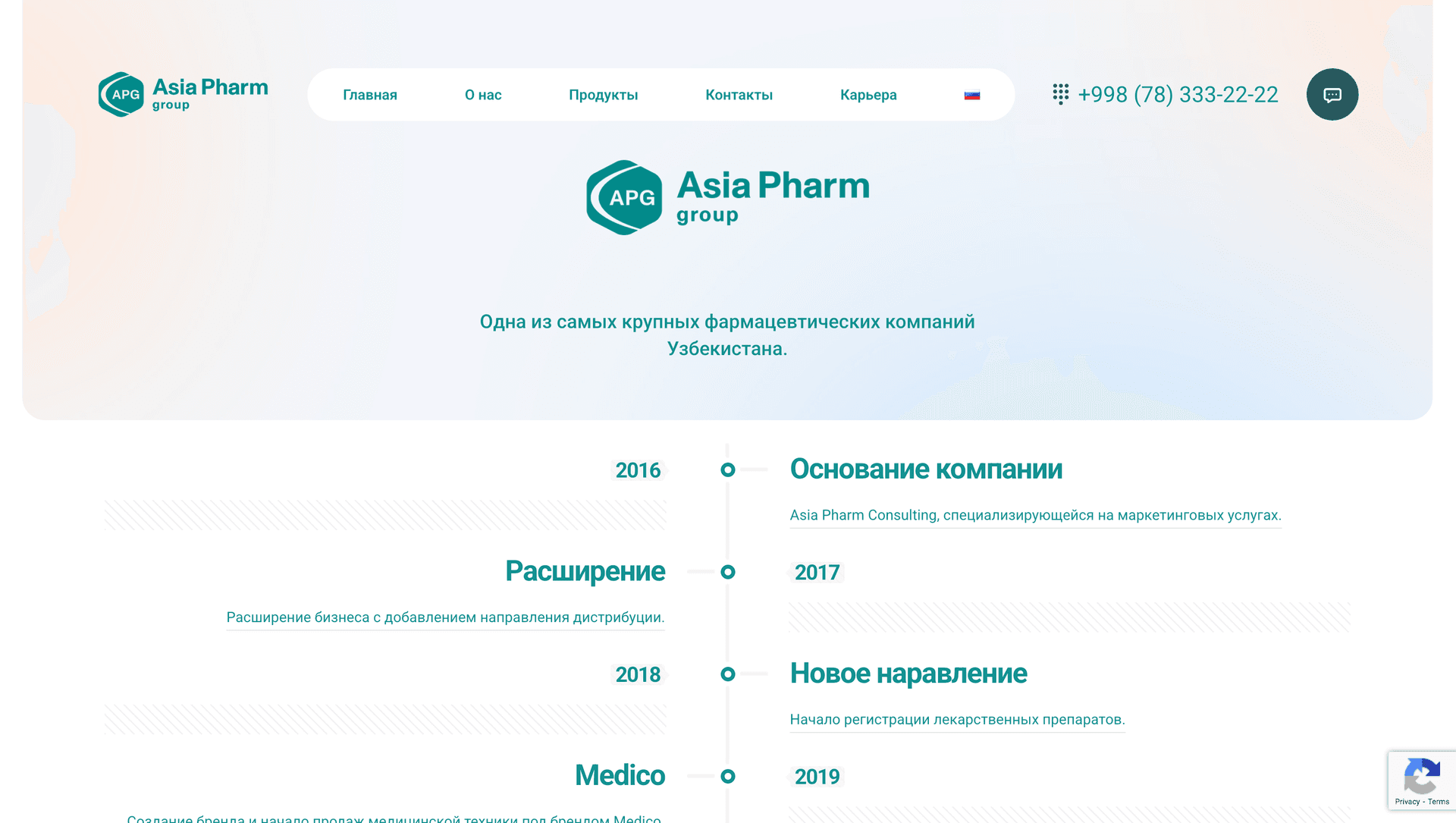
Asiapharm
CRM for Asia Pharm Group, an Uzbek pharmaceutical company distributing medicines and supplements under its own brands through 3,000+ pharmacies across all 12 regions. The backend covers the client and pharmacy register, the product catalogue, medical-representative visit planning and reporting, sales plans, rep training, in-app chats and notifications, with an analytics layer over the pipeline and operational metrics wired in.
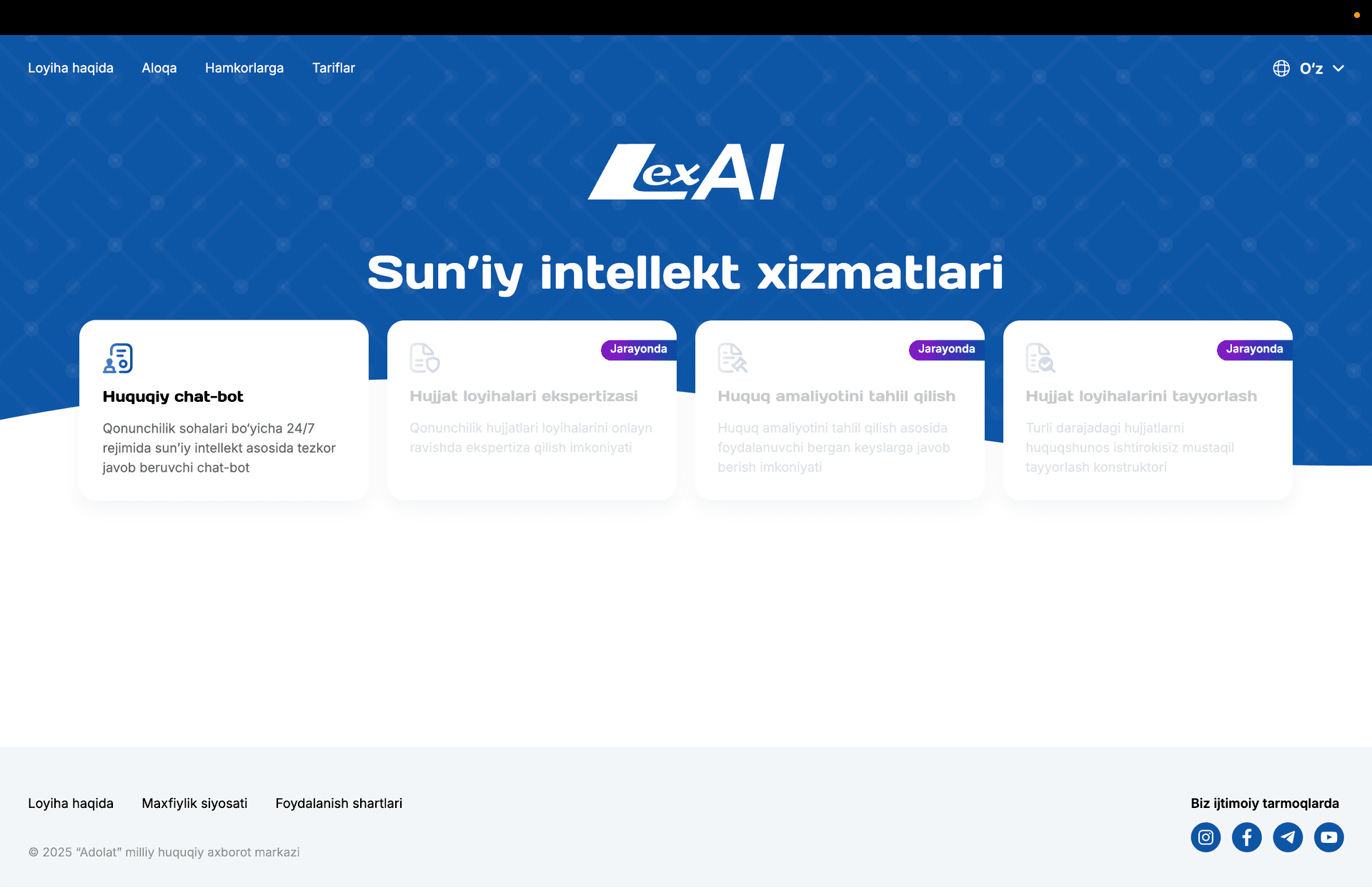
Lex AI
Backend for the state legal-tech platform built for the 'Adolat' National Legal Information Centre under Uzbekistan's Ministry of Justice, alongside the lex.uz legislation database. The service in production is a 24/7 assistant answering questions across areas of Uzbek legislation, streamed over web sockets with token-authenticated middleware, backed by commercial language models. Three further modules are in development: expert review of draft legal acts, case-law analysis over user-submitted scenarios, and a document-drafting constructor.
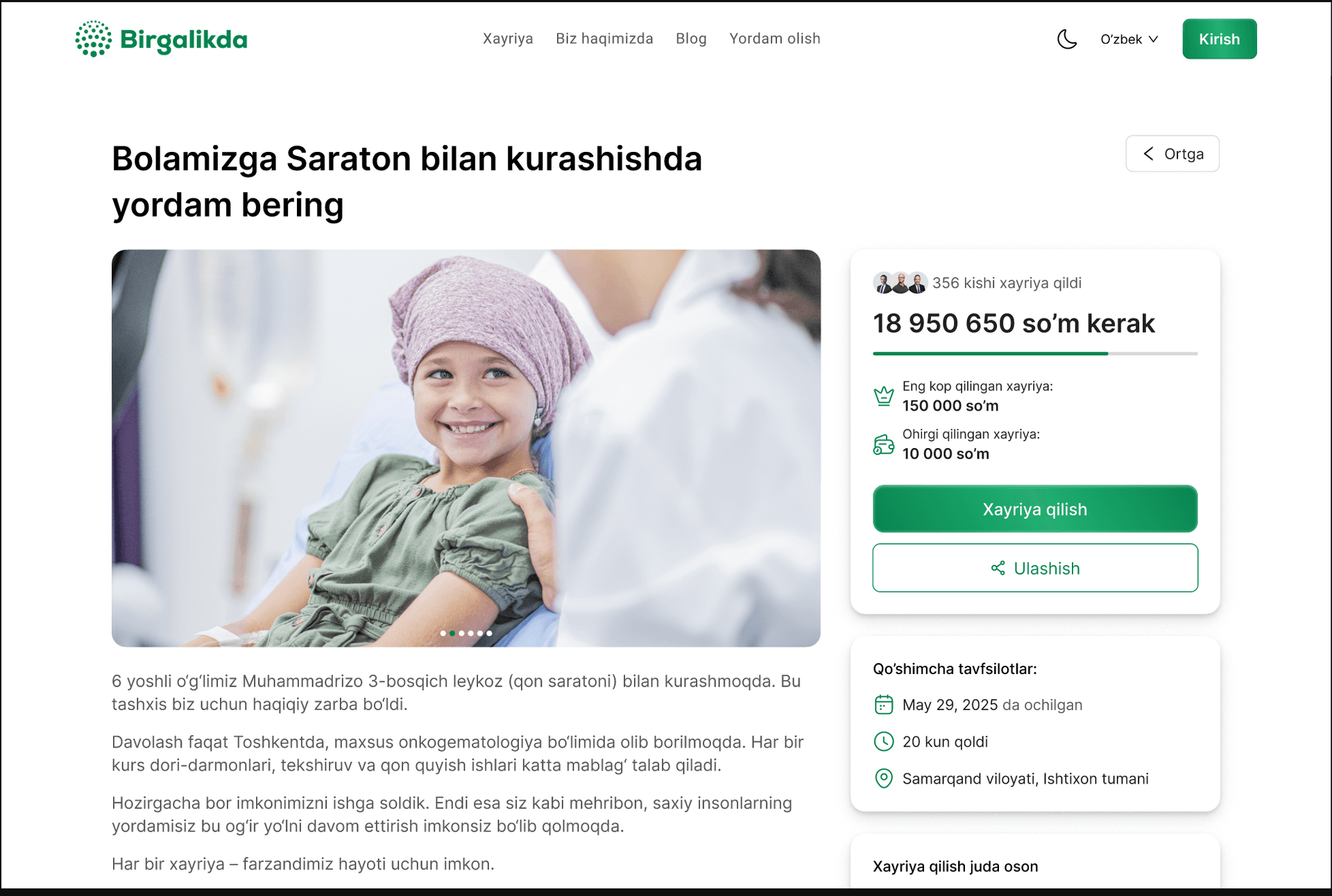
Birgalikda
Backend for a crowdfunding and donation platform: campaign creation and lifecycle, donations recorded against campaigns, contributor accounts, and notification delivery as campaigns move through their milestones.

FMLI
Verification network that puts healthcare professionals' credentials on an immutable ledger, so qualifications are globally accessible, tamper-proof and checkable by any institution. Designed as a single source of truth for hospitals and regulators verifying practitioners across borders.

Taksijon
Backend for an intercity ride-matching app that pairs drivers making trips between Uzbekistan's regions and cities with passengers heading the same way. It splits driver and passenger domains into separate apps over a shared user model, with background workers handling matching and notification work.
Simyog'och
Backend for a job marketplace where employers post vacancies and job seekers search them, free on both sides. It serves the advert lifecycle with filter-first search and saved-filter notifications, real-time chat between employers and candidates over web sockets, and a payments module for promoted listings.

Bal Medical
Backend for BAL, which manufactures medical X-ray film for the Central Asian market in A3 and A4 formats. Behind the trilingual public site - products, quality certificates, company profile and enquiry form - it runs the store and cashflow modules: product and stock management, orders, and income and expense tracking per company.

Qunduzbobo
Backend for an AI storybook service: one uploaded photo of a child becomes a cartoon character and a 10+ page illustrated storybook named after them, generated in about five minutes. The catalogue mixes classic tales with originals built around a lesson - honesty, respect for elders, tidiness, screen time. Sold per book in Uzbek, Russian and English through a web store, a Telegram bot and an Android app, with generation running asynchronously on background workers.

Factor ELD
Fleet management platform for US trucking, serving owner-operators through to growing fleets. It pairs FMCSA-certified electronic logging for hours-of-service compliance with a dispatch board, live GPS tracking enriched by traffic and weather, asset and cargo tracking, dash cams, IFTA fuel-tax reporting, and in-app chat and walkie-talkie. Drivers work from iOS and Android apps against a web dashboard, and the platform integrates with major load and visibility networks. Plans run from $29 per truck per month for compliance to $79 for the full fleet suite.
Tana Health
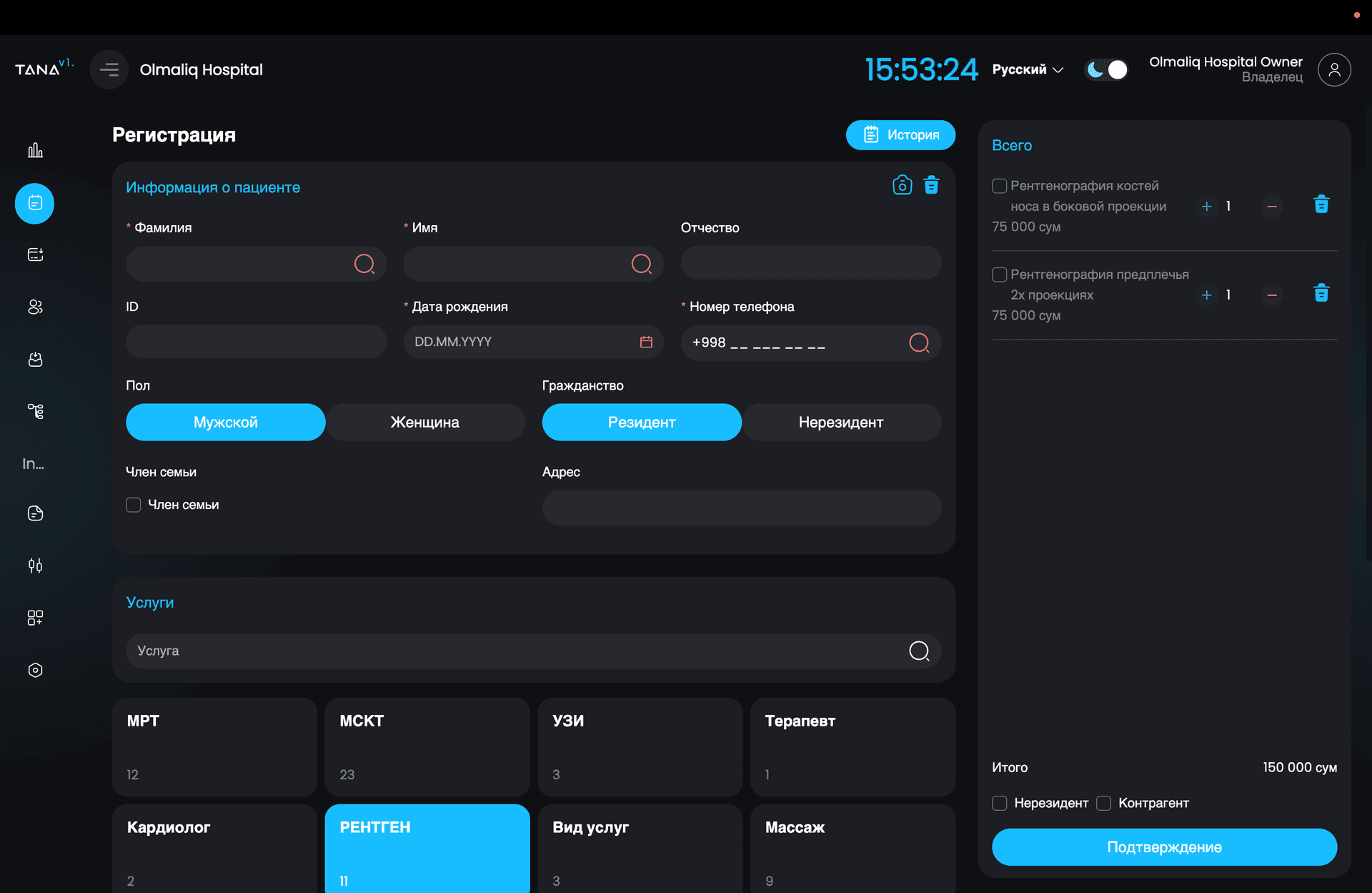
Healthcare platform built on FHIR-structured patient records so data stays portable between providers. The AI layer transcribes the consultation, suggests follow-up questions the clinician may have missed, proposes possible diagnoses and produces a structured visit summary. Alongside the core service runs a separate queue service that manages real-time patient queues per organisation and room, creating a queue automatically when an appointment's service status flips to confirmed and broadcasting every change over web sockets, authenticated with bearer tokens issued by the main API.
%22%2F%3E%3Cstop%20offset%3D%221%22%20stop-color%3D%22hsl(130%2062%25%2014%25)%22%2F%3E%3C%2FlinearGradient%3E%3Cpattern%20id%3D%22d%22%20width%3D%2248%22%20height%3D%2248%22%20patternUnits%3D%22userSpaceOnUse%22%3E%3Ccircle%20cx%3D%223%22%20cy%3D%223%22%20r%3D%222.5%22%20fill%3D%22%23ffffff%22%20fill-opacity%3D%220.07%22%2F%3E%3C%2Fpattern%3E%3C%2Fdefs%3E%3Crect%20width%3D%221600%22%20height%3D%221000%22%20fill%3D%22url(%23g)%22%2F%3E%3Crect%20width%3D%221600%22%20height%3D%221000%22%20fill%3D%22url(%23d)%22%2F%3E%3Ccircle%20cx%3D%221380%22%20cy%3D%22140%22%20r%3D%22260%22%20fill%3D%22%23ffffff%22%20fill-opacity%3D%220.05%22%2F%3E%3Ctext%20x%3D%22800%22%20y%3D%22543%22%20text-anchor%3D%22middle%22%20font-family%3D%22Inter%2C%20'Segoe%20UI'%2C%20system-ui%2C%20sans-serif%22%20font-size%3D%22124%22%20font-weight%3D%22700%22%20letter-spacing%3D%22-2%22%20fill%3D%22%23ffffff%22%20fill-opacity%3D%220.92%22%3ETana%20Clinic%3C%2Ftext%3E%3C%2Fsvg%3E)
Tana Clinic
Digital platform for clinics and medical facilities management.
%22%2F%3E%3Cstop%20offset%3D%221%22%20stop-color%3D%22hsl(330%2062%25%2014%25)%22%2F%3E%3C%2FlinearGradient%3E%3Cpattern%20id%3D%22d%22%20width%3D%2248%22%20height%3D%2248%22%20patternUnits%3D%22userSpaceOnUse%22%3E%3Ccircle%20cx%3D%223%22%20cy%3D%223%22%20r%3D%222.5%22%20fill%3D%22%23ffffff%22%20fill-opacity%3D%220.07%22%2F%3E%3C%2Fpattern%3E%3C%2Fdefs%3E%3Crect%20width%3D%221600%22%20height%3D%221000%22%20fill%3D%22url(%23g)%22%2F%3E%3Crect%20width%3D%221600%22%20height%3D%221000%22%20fill%3D%22url(%23d)%22%2F%3E%3Ccircle%20cx%3D%221380%22%20cy%3D%22140%22%20r%3D%22260%22%20fill%3D%22%23ffffff%22%20fill-opacity%3D%220.05%22%2F%3E%3Ctext%20x%3D%22800%22%20y%3D%22543%22%20text-anchor%3D%22middle%22%20font-family%3D%22Inter%2C%20'Segoe%20UI'%2C%20system-ui%2C%20sans-serif%22%20font-size%3D%22124%22%20font-weight%3D%22700%22%20letter-spacing%3D%22-2%22%20fill%3D%22%23ffffff%22%20fill-opacity%3D%220.92%22%3ETana%20Pay%3C%2Ftext%3E%3C%2Fsvg%3E)
Tana Pay
Payment solution for healthcare services.

Aqcham
Backend for a financial management platform aimed at small and mid-sized Uzbek businesses, positioned against spreadsheet-and-1C bookkeeping. It centralises company cashflow - income and expenses across tangible and intangible streams - computes net profit, feeds forecasting and cash-gap dashboards, and scopes each employee to their own data by role. Background workers drive scheduled recalculation and spreadsheet synchronisation, a payments module handles subscriptions, and live figures are pushed to the dashboard over web sockets.

Nikel
Backend for a tokenisation platform opening fractional ownership of real-world intellectual property beyond closed institutional circles, against a global IP market projected at $18.9 trillion by 2033. The NKL1 token represents asset-backed fractional stakes, with compliance positioned as the core differentiator. Still pre-launch: the public site collects expressions of interest and does not publish chain, tokenomics or contract details.

LiveIn VR
Mixed-reality visualisation service by Livein.uz: it places a company's products into the customer's real surroundings at true size and appearance, and walks buyers through apartments and buildings virtually. Sold B2B to brands and property developers, and marketed as the first commercial mixed-reality offering in Uzbekistan.
%22%2F%3E%3Cstop%20offset%3D%221%22%20stop-color%3D%22hsl(73%2062%25%2014%25)%22%2F%3E%3C%2FlinearGradient%3E%3Cpattern%20id%3D%22d%22%20width%3D%2248%22%20height%3D%2248%22%20patternUnits%3D%22userSpaceOnUse%22%3E%3Ccircle%20cx%3D%223%22%20cy%3D%223%22%20r%3D%222.5%22%20fill%3D%22%23ffffff%22%20fill-opacity%3D%220.07%22%2F%3E%3C%2Fpattern%3E%3C%2Fdefs%3E%3Crect%20width%3D%221600%22%20height%3D%221000%22%20fill%3D%22url(%23g)%22%2F%3E%3Crect%20width%3D%221600%22%20height%3D%221000%22%20fill%3D%22url(%23d)%22%2F%3E%3Ccircle%20cx%3D%221380%22%20cy%3D%22140%22%20r%3D%22260%22%20fill%3D%22%23ffffff%22%20fill-opacity%3D%220.05%22%2F%3E%3Ctext%20x%3D%22800%22%20y%3D%22543%22%20text-anchor%3D%22middle%22%20font-family%3D%22Inter%2C%20'Segoe%20UI'%2C%20system-ui%2C%20sans-serif%22%20font-size%3D%22124%22%20font-weight%3D%22700%22%20letter-spacing%3D%22-2%22%20fill%3D%22%23ffffff%22%20fill-opacity%3D%220.92%22%3EIntercity%20Taxi%3C%2Ftext%3E%3C%2Fsvg%3E)
Intercity Taxi
Backend for an intercity taxi booking platform, covering the full operational surface rather than just ride matching. Drivers onboard through a draft-to-approved pipeline with vehicle and document review; a fleet model of car classes, options and pricing config drives quote calculation over a region-city-route hierarchy with geospatial indexing. Orders run through operator assignment, status timelines and history, with billing covering invoices, payments and driver withdrawals. Authentication is OTP over an SMS gateway with three separate token systems isolating staff, drivers and customers, and five role tiers from customer up to superadmin. Order events, driver GPS updates and payment notifications are pushed over web sockets from an async server.
%22%2F%3E%3Cstop%20offset%3D%221%22%20stop-color%3D%22hsl(268%2062%25%2014%25)%22%2F%3E%3C%2FlinearGradient%3E%3Cpattern%20id%3D%22d%22%20width%3D%2248%22%20height%3D%2248%22%20patternUnits%3D%22userSpaceOnUse%22%3E%3Ccircle%20cx%3D%223%22%20cy%3D%223%22%20r%3D%222.5%22%20fill%3D%22%23ffffff%22%20fill-opacity%3D%220.07%22%2F%3E%3C%2Fpattern%3E%3C%2Fdefs%3E%3Crect%20width%3D%221600%22%20height%3D%221000%22%20fill%3D%22url(%23g)%22%2F%3E%3Crect%20width%3D%221600%22%20height%3D%221000%22%20fill%3D%22url(%23d)%22%2F%3E%3Ccircle%20cx%3D%221380%22%20cy%3D%22140%22%20r%3D%22260%22%20fill%3D%22%23ffffff%22%20fill-opacity%3D%220.05%22%2F%3E%3Ctext%20x%3D%22800%22%20y%3D%22543%22%20text-anchor%3D%22middle%22%20font-family%3D%22Inter%2C%20'Segoe%20UI'%2C%20system-ui%2C%20sans-serif%22%20font-size%3D%22124%22%20font-weight%3D%22700%22%20letter-spacing%3D%22-2%22%20fill%3D%22%23ffffff%22%20fill-opacity%3D%220.92%22%3E7Saber%3C%2Ftext%3E%3C%2Fsvg%3E)
7Saber
Backend for a holding-company aggregation platform: one storefront over 24 business units across 5 clusters, with commission-agent commerce where a single customer order fans out into per-unit sub-orders, each carrying its own commission rate. The public API sits under /api/v1/ with a separate staff management API under /api/v1/admin/, covering catalog, cart, bookings, brands, addresses, concierge, experiences and engagement.
%22%2F%3E%3Cstop%20offset%3D%221%22%20stop-color%3D%22hsl(159%2062%25%2014%25)%22%2F%3E%3C%2FlinearGradient%3E%3Cpattern%20id%3D%22d%22%20width%3D%2248%22%20height%3D%2248%22%20patternUnits%3D%22userSpaceOnUse%22%3E%3Ccircle%20cx%3D%223%22%20cy%3D%223%22%20r%3D%222.5%22%20fill%3D%22%23ffffff%22%20fill-opacity%3D%220.07%22%2F%3E%3C%2Fpattern%3E%3C%2Fdefs%3E%3Crect%20width%3D%221600%22%20height%3D%221000%22%20fill%3D%22url(%23g)%22%2F%3E%3Crect%20width%3D%221600%22%20height%3D%221000%22%20fill%3D%22url(%23d)%22%2F%3E%3Ccircle%20cx%3D%221380%22%20cy%3D%22140%22%20r%3D%22260%22%20fill%3D%22%23ffffff%22%20fill-opacity%3D%220.05%22%2F%3E%3Ctext%20x%3D%22800%22%20y%3D%22543%22%20text-anchor%3D%22middle%22%20font-family%3D%22Inter%2C%20'Segoe%20UI'%2C%20system-ui%2C%20sans-serif%22%20font-size%3D%22124%22%20font-weight%3D%22700%22%20letter-spacing%3D%22-2%22%20fill%3D%22%23ffffff%22%20fill-opacity%3D%220.92%22%3E7SaberID%3C%2Ftext%3E%3C%2Fsvg%3E)
7SaberID
Identity provider for the 7Saber ecosystem — the service behind a 'Sign in with 7SaberID' button, the way Google sits behind 'Sign in with Google'. It is not a social-login wrapper: the only credentials it accepts are its own, phone plus OTP for customers and email plus password for staff. One account spans storefront web, mobile, the admin portal, mini apps and unit-owned systems. It holds its own database and JWKS, so resource servers keep verifying already-issued tokens even while the service itself is down.
%22%2F%3E%3Cstop%20offset%3D%221%22%20stop-color%3D%22hsl(208%2062%25%2014%25)%22%2F%3E%3C%2FlinearGradient%3E%3Cpattern%20id%3D%22d%22%20width%3D%2248%22%20height%3D%2248%22%20patternUnits%3D%22userSpaceOnUse%22%3E%3Ccircle%20cx%3D%223%22%20cy%3D%223%22%20r%3D%222.5%22%20fill%3D%22%23ffffff%22%20fill-opacity%3D%220.07%22%2F%3E%3C%2Fpattern%3E%3C%2Fdefs%3E%3Crect%20width%3D%221600%22%20height%3D%221000%22%20fill%3D%22url(%23g)%22%2F%3E%3Crect%20width%3D%221600%22%20height%3D%221000%22%20fill%3D%22url(%23d)%22%2F%3E%3Ccircle%20cx%3D%221380%22%20cy%3D%22140%22%20r%3D%22260%22%20fill%3D%22%23ffffff%22%20fill-opacity%3D%220.05%22%2F%3E%3Ctext%20x%3D%22800%22%20y%3D%22543%22%20text-anchor%3D%22middle%22%20font-family%3D%22Inter%2C%20'Segoe%20UI'%2C%20system-ui%2C%20sans-serif%22%20font-size%3D%22124%22%20font-weight%3D%22700%22%20letter-spacing%3D%22-2%22%20fill%3D%22%23ffffff%22%20fill-opacity%3D%220.92%22%3EBeFit%3C%2Ftext%3E%3C%2Fsvg%3E)
BeFit
Two-part system that counts people through gym entrances. A GPU box inside each gym watches two cameras — one for entries, one for exits — recognises faces locally and keeps every biometric template on its own machine. What leaves the site is only a count: an anonymous id, a direction, a timestamp and optionally a gender and age bracket. The cloud service collects those counts from every site and makes them answerable in one dashboard. The privacy guarantee is structural rather than policy-based: the payload has no field able to carry a face vector and the cloud database has no column able to store one.
%22%2F%3E%3Cstop%20offset%3D%221%22%20stop-color%3D%22hsl(92%2062%25%2014%25)%22%2F%3E%3C%2FlinearGradient%3E%3Cpattern%20id%3D%22d%22%20width%3D%2248%22%20height%3D%2248%22%20patternUnits%3D%22userSpaceOnUse%22%3E%3Ccircle%20cx%3D%223%22%20cy%3D%223%22%20r%3D%222.5%22%20fill%3D%22%23ffffff%22%20fill-opacity%3D%220.07%22%2F%3E%3C%2Fpattern%3E%3C%2Fdefs%3E%3Crect%20width%3D%221600%22%20height%3D%221000%22%20fill%3D%22url(%23g)%22%2F%3E%3Crect%20width%3D%221600%22%20height%3D%221000%22%20fill%3D%22url(%23d)%22%2F%3E%3Ccircle%20cx%3D%221380%22%20cy%3D%22140%22%20r%3D%22260%22%20fill%3D%22%23ffffff%22%20fill-opacity%3D%220.05%22%2F%3E%3Ctext%20x%3D%22800%22%20y%3D%22477%22%20text-anchor%3D%22middle%22%20font-family%3D%22Inter%2C%20'Segoe%20UI'%2C%20system-ui%2C%20sans-serif%22%20font-size%3D%22104%22%20font-weight%3D%22700%22%20letter-spacing%3D%22-2%22%20fill%3D%22%23ffffff%22%20fill-opacity%3D%220.92%22%3ETable%3C%2Ftext%3E%3Ctext%20x%3D%22800%22%20y%3D%22596%22%20text-anchor%3D%22middle%22%20font-family%3D%22Inter%2C%20'Segoe%20UI'%2C%20system-ui%2C%20sans-serif%22%20font-size%3D%22104%22%20font-weight%3D%22700%22%20letter-spacing%3D%22-2%22%20fill%3D%22%23ffffff%22%20fill-opacity%3D%220.92%22%3EReservation%3C%2Ftext%3E%3C%2Fsvg%3E)
Table Reservation
Restaurant table management system that reads real occupancy from security cameras instead of relying on staff to keep a board up to date. Pose-estimation models over RTSP streams detect seated customers and opens a table session, which then flows through waiter assignment and ordering. Reservations carry time-slot conflict detection, and staff work the floor through an AI-backed Telegram bot.
%22%2F%3E%3Cstop%20offset%3D%221%22%20stop-color%3D%22hsl(199%2062%25%2014%25)%22%2F%3E%3C%2FlinearGradient%3E%3Cpattern%20id%3D%22d%22%20width%3D%2248%22%20height%3D%2248%22%20patternUnits%3D%22userSpaceOnUse%22%3E%3Ccircle%20cx%3D%223%22%20cy%3D%223%22%20r%3D%222.5%22%20fill%3D%22%23ffffff%22%20fill-opacity%3D%220.07%22%2F%3E%3C%2Fpattern%3E%3C%2Fdefs%3E%3Crect%20width%3D%221600%22%20height%3D%221000%22%20fill%3D%22url(%23g)%22%2F%3E%3Crect%20width%3D%221600%22%20height%3D%221000%22%20fill%3D%22url(%23d)%22%2F%3E%3Ccircle%20cx%3D%221380%22%20cy%3D%22140%22%20r%3D%22260%22%20fill%3D%22%23ffffff%22%20fill-opacity%3D%220.05%22%2F%3E%3Ctext%20x%3D%22800%22%20y%3D%22477%22%20text-anchor%3D%22middle%22%20font-family%3D%22Inter%2C%20'Segoe%20UI'%2C%20system-ui%2C%20sans-serif%22%20font-size%3D%22104%22%20font-weight%3D%22700%22%20letter-spacing%3D%22-2%22%20fill%3D%22%23ffffff%22%20fill-opacity%3D%220.92%22%3ETuron%20Telecom%3C%2Ftext%3E%3Ctext%20x%3D%22800%22%20y%3D%22596%22%20text-anchor%3D%22middle%22%20font-family%3D%22Inter%2C%20'Segoe%20UI'%2C%20system-ui%2C%20sans-serif%22%20font-size%3D%22104%22%20font-weight%3D%22700%22%20letter-spacing%3D%22-2%22%20fill%3D%22%23ffffff%22%20fill-opacity%3D%220.92%22%3ESupport%20Bot%3C%2Ftext%3E%3C%2Fsvg%3E)
Turon Telecom Support Bot
Support agent for Turon Telecom, an ISP in Tashkent. It runs on a Telegram business-connected bot, so its replies appear in the customer's chat as though sent from the support account itself and a human operator can take over mid-conversation just by typing. The bot identifies the customer, classifies intent, answers FAQ questions, triages technical complaints and escalates when it cannot help. A seven-state finite-state machine drives the flow and a language model is invoked only where free-form understanding is actually needed, with regex and keyword matching handling the cheap cases first.
%22%2F%3E%3Cstop%20offset%3D%221%22%20stop-color%3D%22hsl(85%2062%25%2014%25)%22%2F%3E%3C%2FlinearGradient%3E%3Cpattern%20id%3D%22d%22%20width%3D%2248%22%20height%3D%2248%22%20patternUnits%3D%22userSpaceOnUse%22%3E%3Ccircle%20cx%3D%223%22%20cy%3D%223%22%20r%3D%222.5%22%20fill%3D%22%23ffffff%22%20fill-opacity%3D%220.07%22%2F%3E%3C%2Fpattern%3E%3C%2Fdefs%3E%3Crect%20width%3D%221600%22%20height%3D%221000%22%20fill%3D%22url(%23g)%22%2F%3E%3Crect%20width%3D%221600%22%20height%3D%221000%22%20fill%3D%22url(%23d)%22%2F%3E%3Ccircle%20cx%3D%221380%22%20cy%3D%22140%22%20r%3D%22260%22%20fill%3D%22%23ffffff%22%20fill-opacity%3D%220.05%22%2F%3E%3Ctext%20x%3D%22800%22%20y%3D%22477%22%20text-anchor%3D%22middle%22%20font-family%3D%22Inter%2C%20'Segoe%20UI'%2C%20system-ui%2C%20sans-serif%22%20font-size%3D%22104%22%20font-weight%3D%22700%22%20letter-spacing%3D%22-2%22%20fill%3D%22%23ffffff%22%20fill-opacity%3D%220.92%22%3EDostonbek%3C%2Ftext%3E%3Ctext%20x%3D%22800%22%20y%3D%22596%22%20text-anchor%3D%22middle%22%20font-family%3D%22Inter%2C%20'Segoe%20UI'%2C%20system-ui%2C%20sans-serif%22%20font-size%3D%22104%22%20font-weight%3D%22700%22%20letter-spacing%3D%22-2%22%20fill%3D%22%23ffffff%22%20fill-opacity%3D%220.92%22%3EIslomjonov%20Port%E2%80%A6%3C%2Ftext%3E%3C%2Fsvg%3E)
Dostonbek Islomjonov Portfolio
Monorepo portfolio for an independent architectural visualisation (CGI) practice based in Tashkent. A single-page frontend is paired with a REST backend whose built-in admin is the primary content management interface, so the practice edits its own work without a separate CMS.

EasyTargetBot
Ad-delivery platform for Telegram bots. A publisher bot forwards a Telegram update, the platform picks an eligible campaign, delivers it into the user's chat through that bot, and bills the advertiser. The backend splits into advertiser, publisher, channel, delivery and billing domains, with a client SDK published separately for integrators.